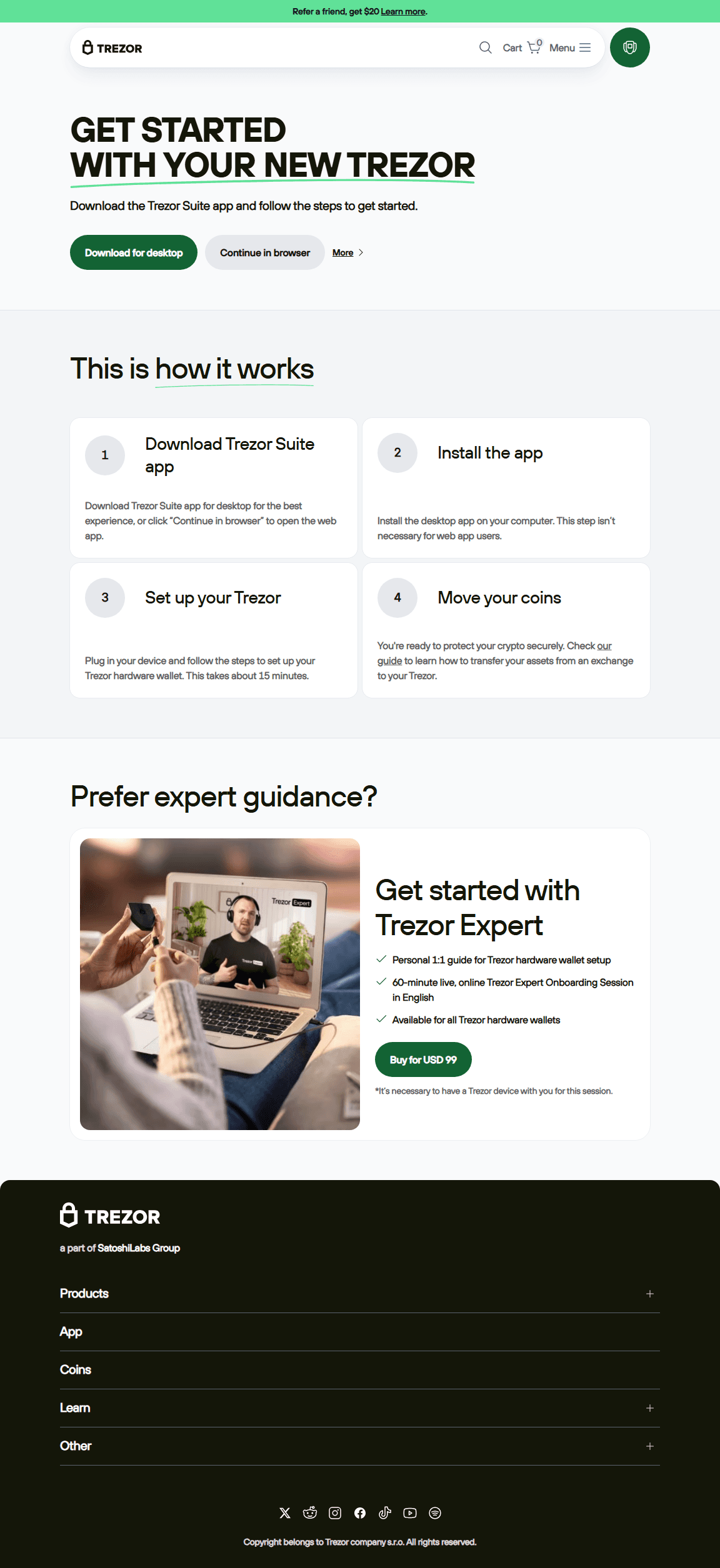
Trezor.io/start: Securely Setting Up Your Trezor Hardware Wallet
Cryptocurrency ownership brings freedom, but it also comes with responsibility. Unlike traditional financial systems, there is no customer support desk to recover lost funds or reset access credentials. Your private keys are the only proof of ownership. This reality makes security essential, not optional. For users who want full control over their digital assets, Trezor hardware wallets provide one of the safest storage solutions available. The official setup process begins at Trezor.io/start, ensuring that your wallet is configured correctly and securely from the very first step.
What Makes Trezor Different?
Trezor is a cold storage device, meaning it keeps private keys completely offline. This prevents exposure to online threats such as malware, phishing scams, and malicious browser extensions. Even if your computer is infected, your funds remain protected because transactions must be confirmed directly on the physical device.
Trezor’s open-source design, long-standing reputation, and commitment to transparency have made it one of the most trusted names in the cryptocurrency ecosystem.
The Importance of Starting at Trezor.io/start
The cryptocurrency space is a frequent target for scammers who create fake wallet software and imitation websites. These scams often aim to steal recovery phrases or trick users into installing compromised firmware.
The Trezor.io/start page is the only official starting point for setting up your device. It ensures that:
You download genuine Trezor software
Your firmware is authentic and untampered
You follow verified security steps
Your recovery seed is generated safely
Using unofficial sources can permanently compromise your funds.
Step 1: Verifying Your Device
Before connecting your Trezor, carefully examine the packaging. The box should arrive sealed and unused. Trezor devices are never shipped with firmware pre-installed or with a recovery seed already created.
Inside the package, you will find:
Your Trezor device
A USB connection cable
Recovery seed cards
Setup instructions
If anything appears damaged or pre-configured, do not proceed.
Step 2: Connecting and Accessing Trezor.io/start
Once your device is connected to your computer, it will prompt you to visit Trezor.io/start. This page detects your device model and provides tailored setup instructions.
From here, you’ll be guided to install Trezor Suite, the official application used to manage your wallet. Trezor Suite acts as a secure bridge between your hardware wallet and the blockchain.
Step 3: Installing Trezor Suite
Trezor Suite is available for Windows, macOS, and Linux. After downloading and installing it from the official site, launch the application and connect your device.
During first-time use, you’ll be asked to install the latest firmware. Firmware updates are essential, as they protect against newly discovered vulnerabilities and improve device functionality.
Never install firmware from unofficial sources.
Step 4: Creating a Secure PIN
After firmware installation, you will be prompted to create a PIN code. This PIN is required every time you access the device and protects it in case of theft.
The PIN entry system uses a randomized keypad displayed on the device screen, preventing spyware or keyloggers from capturing it. Choose a PIN that is difficult to guess but easy for you to remember.
Step 5: Backing Up with a Recovery Seed
One of the most important steps in the Trezor.io/start setup process is creating your recovery seed. This seed consists of 12, 18, or 24 randomly generated words that serve as the ultimate backup for your wallet.
If your Trezor is lost, damaged, or stolen, the recovery seed allows you to restore your funds on a new device.
Key rules for recovery seed security:
Write it down on paper only
Store it in a secure, offline location
Never photograph or digitize it
Never share it with anyone
Anyone with access to your recovery seed can access your crypto.
Step 6: Using Your Wallet
Once setup is complete, you can begin using Trezor Suite to manage your digital assets. The interface allows you to:
Send and receive cryptocurrencies
Monitor balances and transactions
Manage multiple accounts
Enable privacy features
Every transaction must be approved directly on your Trezor device, ensuring complete control.
Additional Protection Features
For advanced users, Trezor offers optional passphrase protection. A passphrase adds an extra layer of security by creating hidden wallets that only exist when the correct passphrase is entered.
This feature is especially useful for users who want plausible deniability or enhanced protection against physical threats.
Regular firmware updates through Trezor Suite help maintain long-term security.
Final Thoughts
Self-custody is one of the core principles of cryptocurrency, and Trezor empowers users to practice it safely. By following the official instructions at Trezor.io/start, you reduce risk, avoid scams, and ensure that your hardware wallet is configured properly.